Saturday, 15 February 2020

Swanage and Studland

We picked a rather stormy period for a few days break in Swanage.  Storm Dennis arrived Sunday morning and cut short outside activities by early afternoon but prior to that the weather was pretty decent for February!

Apart from the birds shown below I did manage to see two Black-necked Grebes, c20 Brent Geese, Guillemots and a Shag.

Red-breasted Mergansers - A rather confiding group that were feeding in the lee of  Jerry's Point, Studland.


Rock Pipit - By the coastguard lookout at Peveril Point.


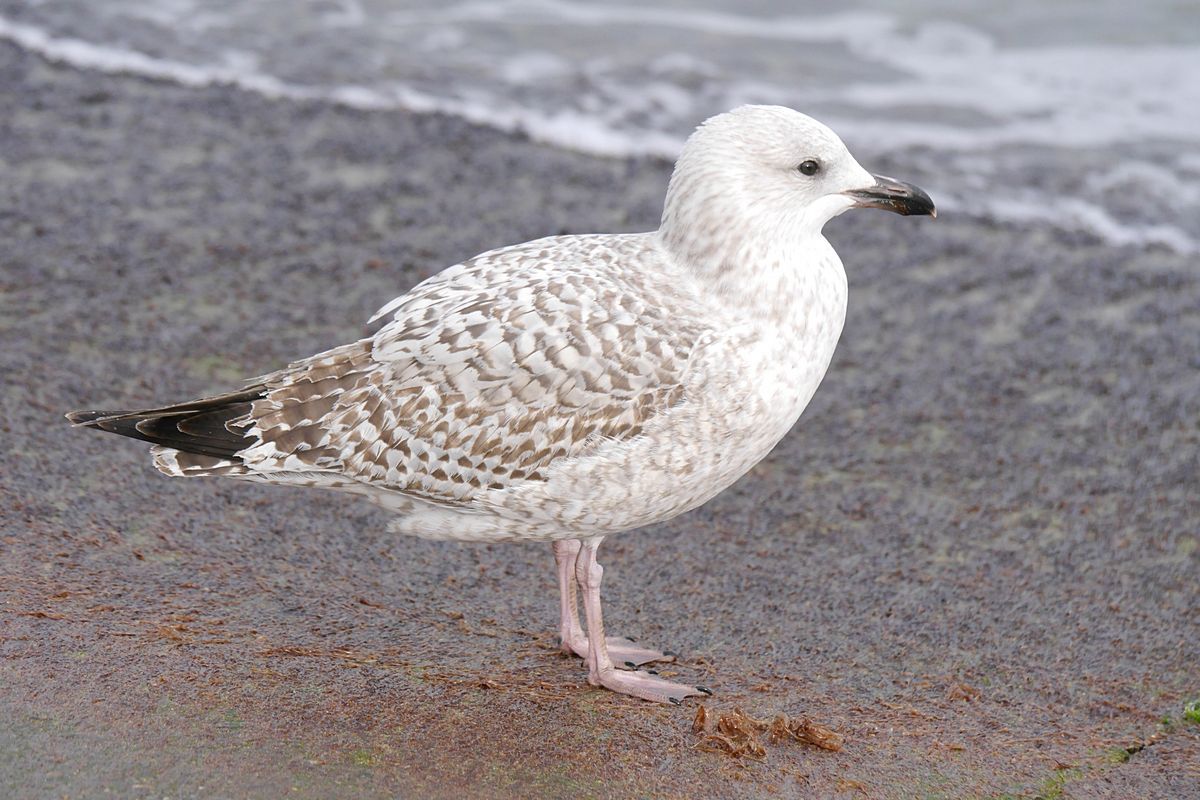
Herring Gulls - With a lack of other interesting species to photograph I took a few of some conveniently perched Herring Gulls.  


A second winter bird

Friday, 24 January 2020

A Few Gulls

An afternoon visit to Little Marlow GP to try out a new Huawei P20 Pro mobile phone for digiscoping.  Reasonable results but no doubt I can improve my technique/setup.

Great Black-backed Gull - A distant bird slightly closer than the main island from the west point.

Grey Heron - On the far side of the sand spit.

Lesser Black-backed Gull - On the closer sand spit.

Common Gull - In with several hundred others and many Black-headed Gulls

Caspian Gull - A species I seem to overlook fairly often but this adult had been present the previous evening.   A Herring Gull on the RHS.


Wednesday, 15 January 2020

Otmoor

A trip to Otmoor with Bourne End U3A group was most enjoyable with some memorable views of a Peregrine eating it's prey, Marsh Harriers causing mayhem in the gathering of dabbling ducks and the impressive clouds of Lapwings and Golden Plover that milled around the sky.  Also seen were three Stonechats and some Pintail that were in with the Shoveler, Teal and Wigeon.

View from the first screen.

High water levels everywhere!

Big Otmoor - This is where the vast majority of the wildfowl, Lapwing and Golden Plover were.  Look carefully and you will see a large number in the sky.

Bullfinches were one of the feature of the visit.  They seemed to be everywhere with over ten seen together.


Reed Bunting - Female

Reed Bunting - Male
One of the most memorable events on the day were the hordes of Lapwing and Golden Plover that were milling around the sky.  Just a small portion of mainly Lapwing shown here.


A Marsh Harrier hassling the dabbling ducks.

A Peregrine getting stuck into what is presumably a duck.


Monday, 6 January 2020

Desert Wheatear Twitch

I joined Graham Smith and Ashley Stow for a trip to Eccles on Sea in Norfolk to see the Desert Wheatear that had been present since 1st January.

We arrived and soon found the bird on the beach being watched by a handful of birders.  The bird soon moved onto the seawall and continued to feed along its length for the next hour.  Poor light made photography difficult but I did manage a few reasonable photos.


The bird gradually made it's way abut 200 metres along the sea wall. 


This would have been my best photo but spoilt by the grass stems. 
There seemed to be plenty of insects for the bird to feed on.

Turnstone - This bird decided to walk between the birders and the sea wall, so was fairly close.
Not too many birds on the sea but about 15 Red-throated Divers flying past, including seven in one group livened things up. 


Hesketh Outmarsh - Christmas Birding

A visit to my daughters in Lancashire for Christmas allowed a visit to Hesketh Outmarsh RSPB Reserve.  This reserve is on the Ribble estuary and is a winter haven for thousands of wildfowl, most notably Pink-footed Geese and dabbling ducks such as Wigeon, Teal, etc.  The reserve has improved dramatically over recent years due to work by the RSPB.

I only had a couple of hours there but could have stayed all day and not seen it all.  Some of the highlights are shown below.

The noticeboard shows how the site looked before habitat improvement by the RSPB

A few of the many thousands of Pink-footed Geese in the area.

Whooper Swans and Canada Geese  - A large pile of rotting potatoes at the back of this field may have attracted this flock.

Whooper Swans

Whooper Swans and Canada Geese
Many other birds were seen but not photographed partly because of the poor light.  These included huge numbers of Wigeon, Teal, Pintail, Shelduck, Curlew, Redshank, Marsh Harrier, Buzzard, etc.


Thursday, 17 October 2019

Portland Bill and Radipole Lake

With winds increasing and with a SW direction I thought it might be worth trying Portland Bill for a seawatch.  I arrived about 8am in light rain and proceeded to the Bill.  There was quite a lot of bird movement.  Hundreds of passerines were flying over the Bill and many directly out to sea heading south.  It was hard to ID these but the majority appeared to be Meadow Pipits.  Dozens of Gannets were plunge diving and other passing.  About 30 Kittiwakes passed to the west in the hour I was there.  A lot of Auks were moving in both directions, as were good numbers of Cormorants and Shags.  A single Arctic Skua heading west was the best bird.

Shag - Surprisingly resting just below the sea watch point at the monument.  It did not seem too bothered by my presence.


Dark Clouds heading towards the Bill!
The ominous dark clouds off of the Bill were getting closer so I decided to head back to the car.  Just in time as the heavens opened and very heavy rain set in for a time.

I decided to head back to Radipole Lake and try and see a few Bearded Tits before we head back home the next day.  By the time I got there the sun was out!

The Bearded Tits were calling frequently and I saw perhaps twenty or so perched or in flight.  Unfortunately all too brief or distant for photos.  The Cetti's Warblers were in fine voice but as usual singing from thick cover.

It is always worth checking the car park at Radipole Lake for gulls.  Not just interesting species but colour ringed gulls.  You can usually drive quite close and photograph the ringed birds.  There is often a few present.  I was not disappointed and got the two photos below.

Mediterranean Gull - Green "RV70"  - Ringed in France or Belgium.  Details awaited.

Herring Gull - Black "773"  - Apparently ringed in Portland so not a great traveller as yet.

Wednesday, 16 October 2019

Med Gull Bonaza

A stop off at Ferrybridge, Weymouth this morning at high tide was interesting in terms of the numbers of Mediterranean Gulls.  There were 40-50 resting on a gravel bar with another 250 or so on the water!  This is the biggest flock I have ever seen.  Quite a few of the Med Gulls have been colour ringed.  I saw two at Lodmoor the previous day and two different birds this morning. Of the four bird, two appear to be Irish, one from Germany and one from Belguim or Holland. Details awaited.

Mediterranean Gulls - 40+ on or around the gravel bat and another 250 or so on the Fleet to the right.

Mediterranean Gull - Yellow 2C41  This was ringed in Langstone Harbour in June 2017.  It spent the winter of 2017/18 in Portugal.  It then returned to Langstone Harbour in Apr 2019.  This is the first sighting since then..

Mediterranean Gull - White 3RA5  A bird from Belguim(see details below)

White "3RA5" was fitted with a metal ring in Antwerp, Belguim in May 2009 as a chick.
It was controlled at Radipole Lake; Weymouth in January 2011.
Three more controls in Antwerp in March 2018.
It was controlled in Oost-Vlaanderen, Belgium (near Ghent) in May 2019 when it was colour ringed.
So the bird is now over ten years old.